


St Andrews Offers Education to Afghani Women Unable to Access Higher Education
Medical student Omulnanin Sultani shares her educational journey after the Taliban takeover of her home country, Afghanistan.
The 17th of September marked the fourth year that girls in Afghanistan have had to live without access to secondary school education after it was banned by the Taliban. Despite 9 in 10 people in Afghanistan opposing this ban, the Taliban has continued to erase women from the academic world, with their most recent ban taking place on the 19th of September, removing all books authored by women from Afghani universities.
The Taliban started its rapid takeover of Afghanistan on the 6th of August 2021. By the 16th of August that same year, they had managed to capture the capital, Kabul. During this time, tens of thousands of people began to flee, heading towards the capital in hopes of escaping or seeking refuge from the devastation caused by the incoming Taliban (BBC, 2021). During the first days of their takeover, it was unclear just how the Taliban planned to rule, allowing some to hold out hope for democratic ruling – but that hope was soon crushed. The Taliban imposed a harsh interpretation of Islamic law, going against previous pledges to respect the rights of women and religious and ethnic minorities.
The women of Afghanistan have been facing persecution and it is not slowing down. From access to education, to work opportunities, to access to public spaces, there is not an aspect of their daily life that has remained unsullied by the Taliban. Girls in Afghanistan have been banned from attending secondary school, with 30% not even starting primary school in the first place, due to poverty, gender norms, and fear. Women are being denied opportunities, with over 78% of them not being in education, training, or employment (UN Women, 2025).
This has had devastating effects on not only the women of Afghanistan themselves, but on the country as a whole. Access to healthcare has become scarce, many women unable to leave their homes out of fear; and those who do seek help are being turned away. In some provinces, women aren’t allowed treatment from male doctors; and combined with the ban on women attending university or becoming midwives, the maternal mortality rates are rising. By 2026, it is predicted that this rate could rise to more than 50%, with premature childbearing to rise to 45% (UN Women, 2025). This ban on university access is forcing women to seek their education elsewhere: women like Omulbanin Sultani.
The Linda Norgrove foundation was set up in the memory of Linda Norgrove, a Scottish woman committed to helping others. Whilst working in Afghanistan, Linda was kidnapped, and tragically died during an attempted rescue. The charity’s main focus is on the innocent bystanders to the political turmoil of Afghanistan. It aims to provide support for education, health needs, and incomes for women. Sultani had been studying medicine at the time of the Taliban takeover and was forced to quit after women were banned from higher education.
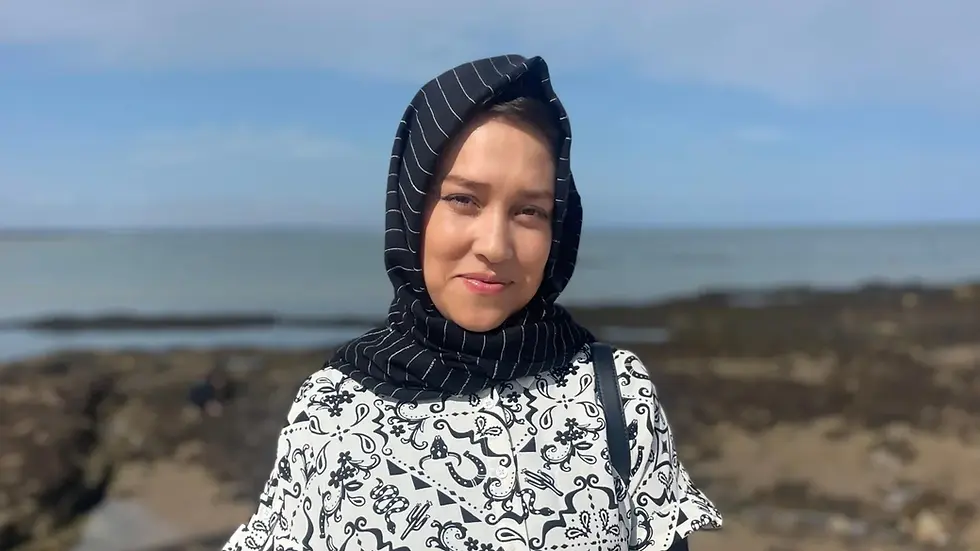
Last year, the Linda Norgrove foundation opened a scholarship programme that would allow nineteen young women to continue their studies in Scotland. Sultani arrived in Scotland in August of 2024, feeling ‘blessed’ and looking forward to the start of her studies. She hopes that in the future she will be able to return to Afghanistan to work there as a dermatologist, but she worries that “if the situation goes on like this, there would not be a place for [her] to go.” However, she is currently focusing on her studies and enjoying her university experience. She is grateful to The University of St Andrews for the opportunity she has been given, alongside the support of her family and fiance.
Sultani recounts what Afghanistan was like before the Taliban took over, saying: “My life was full of freedom and opportunities of which I could use to get better — like universities, courses, NGOs by which I could gain knowledge and could do something for the world.” She continues to say that she has hope for “a brighter future” in Afghanistan, but is unsure of when that future will be realised.


Comments