


Selling a Fairytale: From Practical Magic to North Street
Like many other fans of nostalgic ‘90s rom-coms, I set the tone for the upcoming spooky season in St Andrews’ T-Squared Cinema by watching Practical Magic 2. It’s safe to say that much of the film included what was to be expected of any Hollywood sequel: cheap jokes, a narrative focusing on ‘passing the torch’ to another generation, and a smothering of nostalgic callbacks such as the beloved ‘midnight margaritas’. In spite of this, I was surprised by one particular aspect of the Practical Magic 2’s plot: its relocation from a small town in Massachusetts to the United Kingdom. On my way home, I only had one question in mind: has Hollywood’s glamorisation of the UK gone too far?

Admittedly, it is not uncommon to see Hollywood profiting off the fairy-tale charm of the British town: just look at the use of Surrey in The Holiday. A large part of the plot also centres around the protagonists’ family line in the film, going back to an ancestor which was accused of being a witch and killed. With the history of witch hunts in both the US and the UK, the film being set in a small British town is not entirely uncalled for.
Despite this, I couldn’t help but feel that director Susanne Bier’s portrayal of the fictional English town “Thornfield” just took it a step too far. The dramatically thick fog and looming grey skies, the excessive wisteria on the red-brick cottage, the whimsical clutter in the pub – it didn’t feel simply stereotypical, but rather more like a comically overdone spectacle. I particularly found the scenes featuring the characters’ use of a vintage train to commute in and out of London to be laughably implausible. The fantastical depiction of life in the UK didn’t stop there. The film’s antagonist, Tom Lockland, felt like an embodiment of typical “British” tropes, down to the posh private schoolboy accent and a strange use of a poisoned teapot against the protagonist. Frankly, whilst initially seeming like a classic case of cinematic special effects taken too far, the glaring overreliance on cultural clichés ultimately distracted the viewer from appreciating the dark, folkloric aesthetic which was intended.
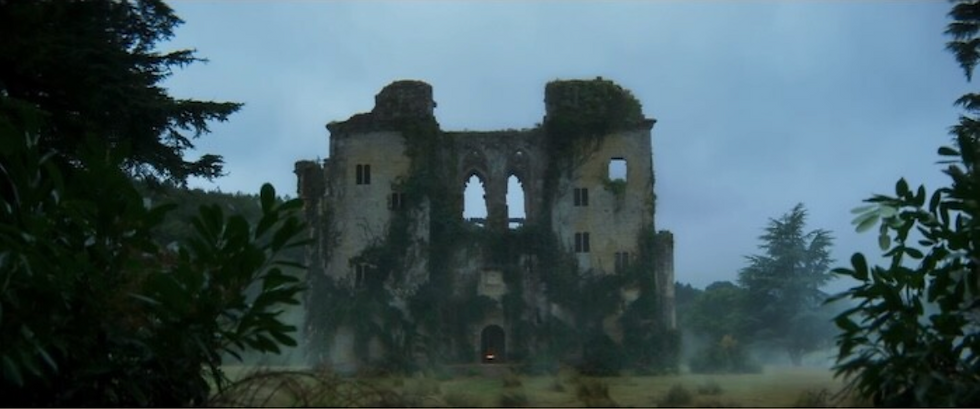
Later that day, as I walked past Martyr’s Hill (formerly known as Witch’s Hill) whilst surrounded by St Andrews’ signature Gothic architecture, I was burdened by an entirely different question: is our university profiting off the same storybook escapism marketed in Practical Magic 2? With our university’s notably high population of international students, it struck me that the idealisation of the spooky UK town may not be contained to the big screen. In fact, could I go as far as saying that one of St Andrews’ main draws may be the aesthetic rather than the academic? Any student in St Andrews will tell you that the traditions we have in the Bubble are far better known than the academic prestige that the university constantly boasts about. From torch-lit processions in our bright red gowns to a collective fear of Patrick Hamilton’s curse, it is not difficult to see how we are surrounded by just as much of a picturesque facade of the UK as Bier’s portrayal.
Perhaps it’s unfair to blame Practical Magic 2 for playing into an idealisation that has already been so abused. It would seem that the craving for a fantasised, picturesque and mystical view of Britain will always leave people seeking cinema tickets – or maybe even university admissions. But one thing is certain: this overly sanitised aesthetic is not enough to make a story feel like anything other than an empty caricature.


Comments