


Sense and Sensibility: Longing for Love on 21st-Century Terms
Warning: Spoilers
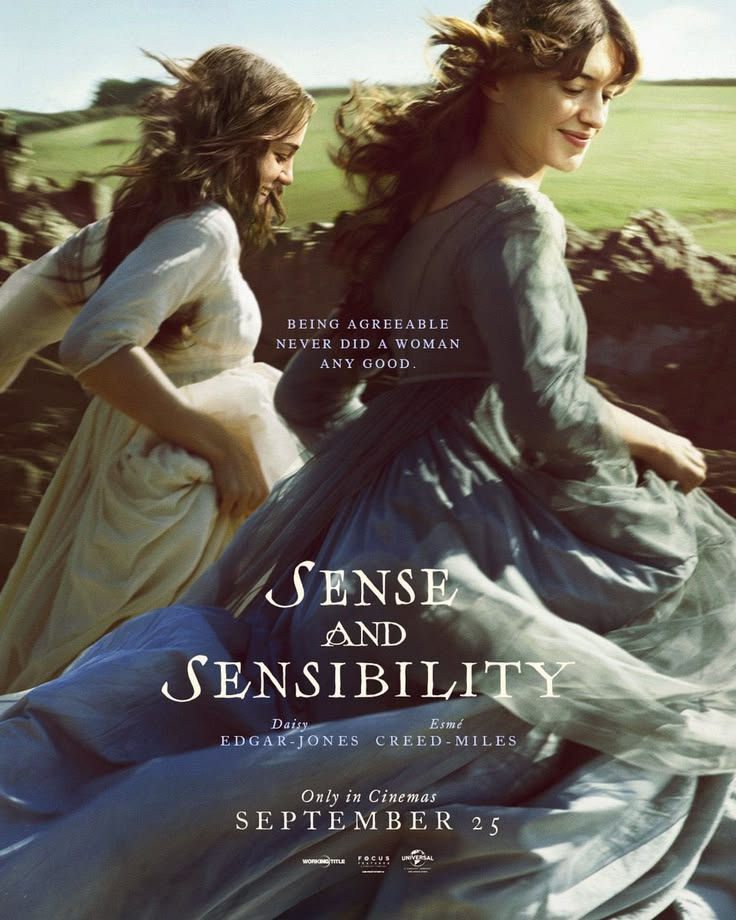
Georgia Oakley’s Sense and Sensibility is a story imbued with girlhood, asserting itself as the rightful heir to the 2005 adaptation of Pride and Prejudice. Oakley’s adaptation questions whether we can ever be masters of our emotions and, more importantly, whether we should try to be. Following two sisters, Elinor with her reserved sense, and Marianne with her wild sensibility, we feel every emotion, concealed or not, right to the very end. But how did Oakley take this beloved classic and make it her own amongst the clustered list of classic adaptations?
This really was a beautiful film, laden with nostalgia for girlhood and the wilderness of youth. With every shot, from the caterpillar on Margaret’s finger at the start of the film, to the swing swaying in the wind at the end, we feel deeply connected to the characters, to their world and their experiences.
With that being said, Oakley’s film also has a newfound sensationalism, most notably through Willoughby’s duel with Colonel Brandon. The unreserved rage of the Colonel acts as a stark antithesis to the character as Austen wrote him as, and Marianne, besotted with his newfound burst of passion, forms an attachment in a much quicker timeframe, thereby undermining their narrative
Austen shows us Marianne’s development through her growing feelings for the Colonel; feelings that are not inspired by an enraged duel in the snow. Austen’s Marianne is changed greatly by her experience with Willoughby. Oakley’s Marianne is the same from start to finish – swayed by a man’s passion, bringing a pressing question to mind: why?
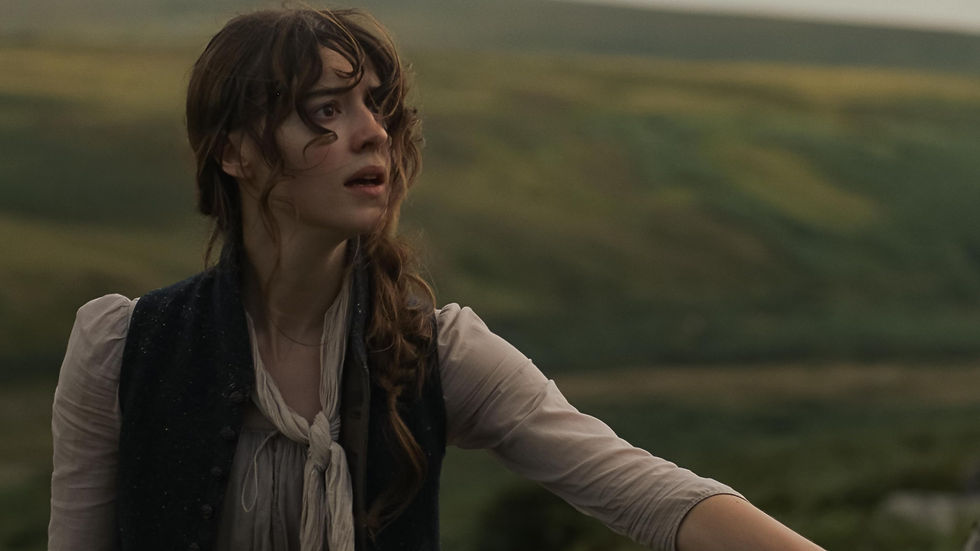
Is this unnecessary action in response to the ‘if he wanted to, he would’ generation? Or perhaps the social media frenzy of appearances, focused more on what is palatable than what is true? In this latest adaptation, could Marianne be deemed fickle for her swift delivery from the hands of death into the arms of Colonel Brandon? And while we never see them wed(maybe to prevent us from noticing just how rushed it is), we get a clear sense while Marianne is still in her sickbed that her feelings have changed profoundly. Not only have we gained unnecessary action, but we have lost the beauty of a slow burn.
Sometimes we get caught up with emotion. We crave a quick fix of affection, loathing the ambiguity that comes before that first kiss. Have we lost the ability to sit back and enjoy the journey: meet someone, get to know them, see what happens… If we look to Oakley’s Marianne, the answer is yes.
Elinor’s storyline, on the other hand, is an entirely different picture. In today’s world, so removed from the likes of balls, dances and salacious love affairs (although St Andrews has its fair share of all three), how do we relate so all-consumingly with this story from so long ago?

This was a film that left you craving human connection by the end. Yet this love, unique to the classics, seems impossible today. You can’t confess your long-held passion for someone after months of speaking, because chances are you already kissed them in 601, or they left you on read a month in. Yet we return to these stories repeatedly: we’ve all felt Elinor’s pain; we’ve all felt Elinor’s worry over Edward’s ambiguity; we all wish to feel Elinor’s love and receive the same in return.
There is still a demand for this love. We talk of ‘if he wanted to, he would’, yet no one has convinced their friend to offer me a parsonage on their big country estate so I can live in comfort with the woman I’m engaged to, all out of a soul-crushing love for me. Who knows, maybe someone out there wants to, but I am yet to meet them.
So, while Oakley’s Sense and Sensibility may be sensationalised to suit our modern tastes, it’s still Austen’s story. There’s an ethereal quality to it: the flowy layers of linen dresses, the wild Devonshire landscape, the rocky coast. It’s our world othered by time, othered by a love we can never emulate.
I left the cinema with a hope for something I don’t think I’ll ever be able to fully explain or understand. Just like Wright’s Pride and Prejudice, this film gave you everything and left you feeling full afterwards. It claimed Austen’s story and left it imprinted on your mind. And, as you walked home (preferably the half an hour back to DRA for ample reflection time), you could do nothing but meditate on the story and your own life.


Comments